Saturday, July 07, 2018

Saturday Morning in the Blogosphere


As Southern California melts under an extreme heatwave, 
I'm thinking of a cooler place like Big Bear Lake


Newspaper death knell heard in the cave - The Nation

The Onion, Clickhole, A.V. Club Brace for Layoffs - The Daily Beast

5 jobs axed as SaltWire merges central Newfoundland newspapers - CBC

Tow Center announces new research fellows in digital journalism - Medium

Trump shields paper mill and wounds newspapers - Lewiston Morning Tribune

Venezuelan newspaper struggling against takeover by government - Aleteia EN

After nearly 118 years, small-town Minnesota newspaper closes its doors - WDAY

Capital Gazette reporter’s tweet should be on every newspaper’s masthead - Poynter

Please help stop the madness that killed five at Capital Gazette newsroom - Capital Gazette

Even fishing and coal mining are not losing jobs as fast as the newspaper industry - Boston Globe


Sun Chemical to raise prices on energy curable inks

Sun Chemical will increase the prices of all ultraviolet (UV) and electron beam (EB) inks in Europe by 4 to 6 percent, effective July 1, the company announced.
Governmental initiatives and regulations geared toward environmental protection have caused many suppliers of photoinitiators to either cease or reduce production for limited periods of time, the company says. Also, Sun says, as outlined by the European Printing Ink Association, photoinitiator supply has also been impacted by major incidents, including a factory fire, unforeseeable events, low stocks, unplanned maintenance and production outages. Along with photoinitiators, increases in key oligomers and monomers have impacted pricing for all energy cure systems.
“While Sun Chemical is working hard to safeguard supply and mitigate the shortage of photoinitiators by qualifying new grades and developing new sources, the high levels of raw material costs are unprecedented and have been passed on to ink manufacturers,” said Felipe Mellado, chief marketing officer, Sun Chemical. “It has been difficult to offset the rising raw material costs on our energy curable inks and unfortunately this has forced us to pass some of these costs on to our customers.”
 Sun Chemical is a subsidiary of Sun Chemical Group Cooperatief of the Netherlands, and is headquartered in Parsippany, New Jersey.

Today in Labor History


Labor History July 7th
Striking New York longshoremen met to discuss ways to keep new immigrants from scabbing. They were successful, at least for a time. On July 14, 500 newly arrived Jews marched straight from their ship to the union hall. On July 15, 250 Italian immigrants stopped scabbing on the railroad and joined the union. – 1882
The March of the Mill Children, the three-week trek from Philadelphia to President Roosevelt’s home on Long Island by striking child and adult textile workers, was launched by Mary Harris “Mother” Jones. The march turned public attention on the scourge of child labor and energized efforts to end it by law. – 1903
Cloakmakers began what was to be a two-month strike against New York City sweatshops. – 1910
Workers began construction on the Boulder Dam (now known as Hoover Dam) on the Colorado River, during the Great Depression. Wages and conditions were horrible—16 workers and work camp residents died of the heat over just a single 30-day period—and two strikes over the four years of construction led to only nominal improvements in pay and conditions. – 1931
The Puerto Rican general strike of 1998 began as a strike of the Puerto Rico Telephone Company (PRTC) workers protested a government privatization plan. Three weeks later, 500,000 people joined a two-day general strike, bringing commerce and travel to a standstill. The strike failed to stop the privatization plan, and in July a consortium led by GTE bought the PRTC for $1.9 billion. – 1998

Friday, July 06, 2018

Pew reports on newspaper circulation

The Pew Research Center has released its latest fact sheet on the newspaper industry.
Estimated U.S. daily newspaper circulation (print and digital) in 2017 was 31 million for weekday and 34 million for Sunday, a drop of 11 percent and 10 percent, respectively, from the previous year, the report says.
The drop was most pronounced in print circulation: Weekday print circulation decreased 11 percent and Sunday circulation decreased 10 percent.
Digital circulation is harder to determine, Pew says, citing reporting practices. Using AAM data, digital circulation in 2017 was projected to have fallen, with weekday and Sunday both down 9 percent and Sunday down 9 percent as well, Pew says. Independent reports from The New York Times and The Wall Street Journal, however, say both companies saw major rises in digital circulation in the past year: 42 percent for the Times and 26 percent for the Journal, along with rises in 2016. If these independent figures are included in both 2016 and 2017, weekday digital circulation would be up by 10 percent.
This would also change the figures for combined print and digital circulation. Including the independent Times and WSJ numbers would still mean an overall drop in circulation year-over-year, but a less significant one: Overall weekday circulation would have dropped by 4 percent in 2017 rather than 11 percent, Pew says.

Through The Lens And Eyes Of My Life

From overcoming birth in a racially segregated Hospital basement in the South. To the streets of LA and Hills of Hollywood. "Through The Lens And Eyes of My Life" is the photography and stories of photojournalist Haywood Galbreath.
Come see the images and hear the story's July 18th at Antioch College 400 Corporate Pointe Culver City, California 6:30 PM-9:00 PM wine and refreshments will be served.
Proceeds from Book and photo sales will be used to support photography programs for youth.
To RSVP and for inquiries on book and Haywood speaking engagements contact: Sydney Chandler at SCM Entertainment & Media (323) 696-0061
Image may contain: 1 person, text

Australia offers millions in grants to support journalism

Australia’s government is offering grants of up to $1 million (more than $740,000 in U.S. dollars) to small and regional publishers, NewsMediaWorks reports. NewsMediaWorks is an organization representing Australia’s news media publishers.
The Regional and Small Publishers Innovation Fund will allow companies with an annual revenue of less than $30 million ($22 million U.S.) to apply for the grants. In total, $48 million (around $35.5 U.S.) will be available in the fund over three years.
Communications Minister Mitch Fifield said the grants would help publishers form new business models to stay competitive.
“We need to sustain quality journalism in our regions to ensure all Australians can access quality local news that is relevant to them,” Fifield said.
To be eligible, publishers must use the money to do public interest journalism to help Australians.
The application deadline is July 27.

Tired of the free newspapers on your lawn? Jefferson Parish has a solution


Canada’s Postmedia to close six papers

Canada’s largest newspaper publisher, Postmedia Network, is closing six community newspapers and scraping print editions and offering staff buyouts at others to cut costs, the Camrose Canadian reports. The Canadian is one of the papers to be closed.
A June 26 internal Postmedia memo said the company will cut salary expenses 10 percent by Aug. 31. The salary reduction will result from layoffs and voluntary buyouts.
The memo from chief executive Paul Godfrey and chief operating officer Andrew MacLeod mentioned recent growth in digital advertising, but said more cuts are necessary as print advertising and subscription revenue drop. 
Along with the Canadian, Postmedia will close the Strathmore Standard in Alberta and the Kapuskasing Northern Times, Ingersoll Times, Norwich Gazette and Petrolia Topic in Ontario.
The closures will mean 16 job losses in sales, distribution and editorial, according to Postmedia spokeswoman Phyllise Gelfand. 
The Graphic in Portage La Prairie, Manitoba, and the Northern News in Kirkland Lake and Pembroke Observer in Ontario will no longer have print editions, but will keep a digital presence. In Alberta, the High River Times will be published weekly instead of biweekly. 

Friday Morning in the Blogosphere

Fourth of July celebration in La Verne, California


Tired of the free newspapers on your lawn? - WWLTV

Welcome a new news outlet to Tallahassee - Tampa Bay Times

'Goofy' tariffs hurting NY printers, newspapers - Albany Times Union

Northern Nevada newspapers reducing print editions - NN Business View

Newspapers see costs spike amid trade spat with Canada - New York Post

When Local Newspapers Close, Taxpayers End Up Footing The Bill - WBUR

Here’s how many Facebook ads some publishers are running on their main pages - Digiday

Jeff Bezos and Amazon have the advertising industry looking over its shoulder - NBC News

For many journalists, the bonds formed in the newsroom remain long after they leave - Poynter

Honor the dead at Capital Gazette today but also remember those who remain - Capital Gazette


Developer has contract to buy former Sarasota newspaper building

The building, at 1741 Main St., in Sarasota, Florida, has a heavy glass front and is well-known in the city. It’s owned by Stephens Capital, a Little Rock, Ark.-based investment firm. The sale is expected to happen at the end of 2018.
Ruben may build apartments on the site, according to the Business Observer.
“It's an incredible opportunity, a building with wide-open floor plates and it's a tremendous canvas unlike any I've had in my entire development career,” Ruben said. “It's a beautiful building on 3.7 acres, in the heart of downtown Sarasota, with the opportunity to some sort of mixed-use project.”
Terms of the pending sale weren’t disclosed. The 72,000-square-foot building is currently vacant and has had a recent asking price of about $14 million.

Today in Labor History


Labor History July 6th
Firefight in Homestead
A strike against the Baltimore & Ohio railroad led to a series of strikes across the northeast, known as the Great Railway Strike of 1877. This was the country’s first major rail strike and was the first general strike in the nation’s history. The strike’s violence led governors in ten states to mobilize 60,000 militia members to reopen rail traffic. The strike would be broken within a few weeks, but it helped to set the stage for later strikes in the 1880s and 1890s.Federal troops were call out for the first time in a labor dispute, helping to crush the strike. – 1877
Striking construction workers in Duluth, Minnesota were shot down by the police. The workers, mostly immigrants, went on strike when contractors reneged on an agreement to pay them $1.75 a day. Mayor John Sutphin ordered police to keep strikers away from scabs, leading to fighting between strikers and police. There was an hour-long gunfight on the corner of 20th Avenue West and Michigan Street that killed two strikers and one bystander and wounded an estimated 30 strikers. The police eventually suppressed the strike through violence. – 1889
An all-day battle between locked out Homestead Steel Works workers and 300 Pinkerton detectives hired by Andrew Carnegie stated at 4am. The Pinkertons were trying to import and protect scabs brought in to replace the striking workers. No one knows who fired first, but the violence escalated when striking steelworks, armed with guns and a homemade cannon attacked the barges that brought in the Pinkerton detectives. Seven Pinkertons and 11 union members died in the battle. The strike lasted for months. Court injunctions eventually helped to crush the union, protecting the steel industry for decades from organized labor. Alexander Berkman and Emma Goldman plotted to assassinate Homestead Boss Henry Clay Frick for his role in killing the workers. Berkman later carried out the assassination attempt, failed, and spent years in prison. – 1892
Rail union leader Eugene V. Debs is arrested during the Pullman strike, described by the New York Times as “a struggle between the greatest and most important labor organization and the entire railroad capital” that involved some 250,000 workers in 27 states at its peak. – 1894
Wobbly and anarchist labor organizer Joe Hill’s song “The Preacher and the Slave” first appeared in the Industrial Workers of the World’s (IWW’s) Little Red Songbook. – 1911
Long-haired preachers come out every night,Try to tell you what’s wrong and what’s right;But when asked how ’bout something to eatThey will answer in voices so sweetChorusYou will eat, bye and bye,in that glorious land above the sky;Work and pray, live on hay,You’ll get pie in the sky when you dieAnd the Starvation Army, they play,And they sing and they clap and they pray,Till they get all your coin on the drum,Then they tell you when you’re on the bumChorusWorkingmen of all countries, uniteSide by side we for freedom will fightWhen the world and its wealth we have gainedTo the grafters we’ll sing this refrainChorus
Transit workers in New York began what is to be an unsuccessful 3-week strike against the then-privately owned Interborough Rapid Transit (IRT) subway. Workers were forced to sign yellow-dog contracts which mandated they join a company union. Most transit workers labored seven days a week, up to 11.5 hours a day. – 1926
Explosions and fires destroyed the Piper Alpha drilling platform in the North Sea, killing 167 oil workers—the worst loss of life ever in an offshore oil disaster. The operator, Occidental, was found guilty of having inadequate maintenance and safety procedures, but no criminal charges were ever brought. – 1988
Fourteen firefighters were killed battling the South Canyon Fire on Storm King Mountain in Glenwood Springs, Colorado. – 1994

Thursday, July 05, 2018

Real estate firm buying Arizona Republic building

ViaWest Group, a Phoenix-based real estate company, is buying the office building in downtown Phoenix that houses The Arizona Republic. Gannett is selling the 10-story building and parking garage.
The Republic will stay in the building, the paper reports.
Terms of the deal were not disclosed.
The sale is expected to be completed in September, and Gannett will have a lease at the property, according to an announcement from Greg Burton, The Republic’s editor.  
The Republic and two other companies share the 250,000-square-foot building, completed in 1995. KPNX-TV and digital marketing company G/O Digital, both owned by Tegna Inc., will continue to occupy space in the building, according to the announcement.
“The Arizona Republic has been a cornerstone of the Arizona news landscape for decades and we remain dedicated to Arizona, our partners and communities. This building is a wonderful part of our history, but this is an opportunity to modernize our day-to-day environment and consolidate operations to spaces more adaptable to digital growth and innovation,” Burton’s statement to staff said.

EXACT REPLICA of the LIBERTY BELL in front of the La Verne City Hall?

Digiday: Confusion reigns after coming of GDPR

Rampant confusion and a myriad of approaches are apparent a month after the dawning of GDPR, Digiday reports.
GDPR, General Data Protection Regulation, is the European Union’s new set of rules aimed at giving EU citizens more choice and control over data. Organizations are now required to be sure personal data is collected legally, and those who collect data it will need to protect it or be hit with fines. GDPR’s enforcement began May 25.
“Pretty much everyone is breaking the law right now,” Denmark-based media analyst Thomas Baekdal told Digiday. “There is not a single consent dialogue box anywhere that is easy to understand. We (publishers) have not really realized how much this is going to hit us. Everyone is trying to make things work the way they used to, rather than thinking about privacy.”
Widely different approaches to consents, opt-in and opt-out messages, and cookie-banner messages are popping up. A lack of clarity in the regulation is dogging many, Digiday reports.
The BBC and others report that Tronc and Lee Enterprises sites were blocked in the EU due to GDPR’s implementation.

Thursday Morning in the Blogosphere

Fourth of July celebration La Verne, California 2018


Newspapers may be struggling but the news is still crucial - Troy Media

She started a newspaper that helps Ohio's inmates rebuild their lives - CNN

Nevada Appeal, other newspapers cut print editions - Las Vegas Review Journal

Trump's newsprint tariff is a lose/lose for newspapers and jobs | Editorial - PennLive

Former Hubbard Broadcasting employee threatened company - Minneapolis Star Tribune

Preservationists call for historic status for Los Angeles Times buildings - Los Angeles Times

Digital literacy project sets an ambitious goal: Wikipedia pages for 1,000 newspapers - Poynter

As it slides toward authoritarianism, Venezuela targets one of its independent newspapers - WaPo

Thanks to California, a news site now has to let you cancel your subscription online - Nieman Lab

Two SLO County newspapers have a new publisher but fewer reporters - San Luis Obispo Tribune


Gannett partners with Presteligence

Gannett Imaging and Design Center will use My News 360 CMS, Adobe InDesign integration tools, and STATUS to design pages for commercial clients beginning in July, software developer Presteligence announced.
GIADC’s clients will write and post content in the My News 360 CMS. Presteligence’s cloud-based CMS allows users to access the system from any device with a web browser to write stories, upload photos and upload ads. This content is made available as an RSS feed for their clients’ websites or other third parties.
Once stories are edited, content becomes available for the designers to place on pages using Adobe InDesign integration tools.
Through STATUS, a cloud-based page tracking portal, internal and external users can see a status of overall page production.
GIADC will have the opportunity to upsell components of My News 360 to clients

Today in Labor History

Labor History July 5th
Bloody Thursday
Thousands of United States Marshals and some 12,000 United States Army troops, commanded by Brigadier General Nelson Miles, interfered with a peaceful labor strike led by Eugene Debs against the Pullman Palace Car Company, which had drastically cut wages. President Cleveland wanted the trains moving again and based the action on his constitutional responsibility for the mail. His lawyers argued that the boycott violated the Sherman Antitrust Act and represented a threat to the public safety. Federal troops killed 34 American Railway Union members in the Chicago area and buildings constructed for the 1893 World’s Columbian Exposition in Chicago’s Jackson Park were set ablaze, reducing seven to ashes. Debs and others were imprisoned for violating injunctions. – 1894 
Two strikers were shot and killed and more than 100 were injured by San Francisco police in what came to be known as “Bloody Thursday,” leading to one of the last General Strikes in U.S. that effectively shut down both San Francisco and Oakland. The governor called in the National Guard to suppress the strike in what one paper called “War In San Francisco!”  Police and National Guard violence led to 43 injuries due to clubbing and gas, and 30 more from bullet wounds. Two chemical companies used the unrest as an opportunity to test and sell their wares.  Joseph Roush, from Federal Laboratories, shot a long-range tear gas shell at the strikers. He then told his company, “I might mention that during one of the riots, I shot a long-range projectile into a group, a shell hitting one man and causing a fracture of the skull, from which he has since died. As he was a Communist, I have had no feeling in the matter and I am sorry that I did not get more.” – 1934
The National Labor Relations Act, also known as the Wagner Act, was signed by President Roosevelt. This statute guarantees the basic right of private sector employees to organize into trade unions, engage in collective bargaining for better terms and conditions at work, and to take collective action including striking when necessary. The act also created the National Labor Relations Board, which conducts elections that can require employers to engage in collective bargaining with labor unions. The Act does not apply to workers who are covered by the Railway Labor Act, agricultural employees, domestic employees, supervisors, federal, state, or local government workers, independent contractors and some close relatives to individual employers. – 1935
Eleven firefighters and one railway employee were killed in an explosion in Kingman, Arizona., as propane was being transferred from a railroad car to a storage tank. – 1973
Rebel Longshoreman, writer and Wobbly Gilbert Mers (1908-1998) died. Mers wrote the book “Working the Waterfront: The Ups and Downs of a Rebel Longshoreman” in which he exposed the Texas Rangers of the 1930s and 1940s as legalized strike-breaking bullies. – 1998

Tuesday, July 03, 2018

USA Today producing conservative newsletter

USA Today has launched Views from the Right, a weekly conservative newsletter, featuring “the best in conservative commentary from around the country sent to you once a week.”

The newsletter is a beta version of a more flushed-out product likely to launch in the third quarter, Poynter reports.

Read more....

La Verne Mayor don Kendrick invites EVERYONE to the fabulous La Verne 4th of July CELEBRATIONS


Editor organizations work toward merger

The American Society of News Editors and the Associated Press Media Editors are moving forward a merger plan aimed at creating a new journalism leadership organization, the groups announced.

The executive teams of ASNE and APME met in mid-June in New York City and agreed to go forward with merger recommendations developed over months of talks between the groups.

The new organization will support current news leaders, help develop emerging leaders and represent a stronger, more unified voice that defends a free and independent press, according to a news release.

Continue reading....

New owner describes plan for Los Angeles Times


Analysts react to BH Media’s management deal with Lee

Industry watchers reacted with interest to the announcement that Lee Enterprises will manage Warren Buffett’s BH Media papers in 30 markets, an arrangement to start July 2.

“The announcement did not say, but my guess is that Lee is now positioned to acquire the BH papers at a later date,” wrote Poynter Institute analyst Rick Edmonds. “The move indicates Buffett's souring on the prospects of local newspapers, as he has said at recent shareholder gatherings, and a sort-of phased withdrawal from the business.”

Lee CEO Kevin Mowbray said his company looks to make some $50 million over the five-year agreement. The agreement sets a yearly $5 million fixed fee plus a significant percentage of profits over benchmarks. Either party can extend the agreement.

Read more....

Tuesday Morning in the Blogosphere

Los Angeles Times building at 2nd and Spring Streets


Local Newspapers Reducing Publishing Schedules - KTVN

Newsonomics: What’s next for the L.A. Times? - Ken Doctor

A guide to anti-misinformation actions around the world - Poynter

Postmedia is closing seven community newspapers - Brooks Bulletin

The man who created the World Wide Web has some regrets - Vanity Fair

Buyers Are Circling Tronc After Split With Flagship L.A. Times - Bloomberg

President Trump Orders Flags Fly at Half-Staff for Capital Gazette Victims - NBC

The biggest threat to democracy might be the loss of local newspapers - Press Pubs

You can read about trade war in newspapers – for now - Chambersburg Public Opinion

As we pack up, a bittersweet ode to a workplace that was my second home - L.A. Times

News industry honors victims of Capital Gazette shooting

The news industry reacted with horror and sadness to the deadly shooting Thursday at the Capital Gazette newspaper in Annapolis, Maryland.

Five were killed in the shooting: Rob Hiassen, Wendi Winters, Gerald Fischman, John McNamara and Rebecca Smith.

Suspect Jarrod Ramos was being held without bond on murder charges as of Sunday. Law enforcement sources say Ramos launched an attack on the paper because he was angry about its coverage of his 2011 conviction for harassing a former classmate. Ramos sued the paper, but a judged tossed his lawsuit.


Here are some details on those killed:

Rob Hiaasen was a columnist and assistant editor. A former reporter for The Baltimore Sun, Hiaasen also write for The Washington Post and The Huffington Post. Hiassen was the brother of author Carl Hiaasen. He was 59.

Wendi Winters, 65, came to the newspaper following a career in fashion and public relations, according to the Baltimore Sun. The mother of four quickly became known as an energetic freelance reporter and knowledgeable source about local events in the community.

Gerald Fischman was “the conscience and voice” of the paper colleagues said, paying tribute to the eccentric and “brilliant” editorial page editor. Fischman, 61, had been at the paper since 1992, where he was known for an incisive intellect and trademark cardigans, according to the Baltimore Sun. 

Rebecca Smith was a sales assistant who was a recent hire at the newspaper. The 34-year-old joined the Capital Gazette after working in marketing for a healthcare organization, according to the Sun. She grew up in the Baltimore area and lived in eastern Baltimore County with her fiance.

John “Mac” McNamara loved covering sports for the Gazette. He had recently returned to covering news as an editor and reporter at the Bowie Blade-News and the Crofton-West County Gazette, according to the Sun. But his social media posts show that sports held a special place in his heart. He was 56.

Complete article....

Today in Labor History

Labor History July 3rd
2000 workers, many of whom are children, from 20 textile mills in Paterson, NJ, went on strike. They demanded 11 hour days (down from 13.5 hours). Employers refused to negotiate and broke the strike by declaring a reduction in work hours to twelve hours daily during the week and nine hours on Saturdays. – 1835 
Feminist Charlotte Perkins Gilman was born in Hartford, Connecticut. She was a prominent feminist, sociologist, novelist, writer of short stories, poetry and nonfiction, and a lecturer for social reform. Her best-remembered work today is her semi-autobiographical short story “The Yellow Wallpaper” which she wrote after a severe bout of postpartum psychosis. – 1860
A gun battle ensued when striking hard rock miners in Telluride, Colorado confronted scabs at the mine. Three died and six were injured. Later that day, the striking miners rounded up the scabs and ordered them to leave the country. The strike was settled three days later when owners agreed to the miners’ demands for $3/day and an either -hour day. – 1901

Monday, July 02, 2018

Use of social media for news down, says Reuters report

Using social media for news is falling, according to a report from Oxford’s Reuters Institute for the Study of Journalism. “The use of social media for news has started to fall in a number of key markets — after years of continuous growth. Facebook is down 9 percentage points in the U.S. while use of alternative platforms like WhatsApp, Instagram, and Snapchat are increasing,” the report says.

The report attributes the trend to a decline in the discovery, posting, and sharing of news in Facebook.

Continue reading....

Monday Morning in the Blogosphere

With retired Los Angeles Times press-room supervisor Joe Delmendo 
and his wife Dr. Josie Delmendo


Paper boys deliver in Hale Centre's Newsies - Davis Clipper

It's time to start paying for Canada's newspapers - Toronto Star

At Capital Gazette, Lack of Security Was 'Deliberate' - The Root

US sites continue to block European visitors post-GDPR - Digiday

From the publisher's desk: Eagle completes paywall - Berkshire Eagle

Advance Local convenes tough talks with readers. Issue one: guns - Poynter

Turkish newspaper Habertürk abandons print, goes digital only - Daily Sabah

Did Mark Twain Say 'Fear the Media, for They Will Steal Your Honor'? - Snopes

Trust in newspapers rises while social media falls - The Australian Financial Review

Honoring victims of Capital Gazette shooting by carrying on their mission - Times Leader


IFRA & DCX: Next Business for Publishers and Content Strategists

News and content generate business! This will be highlighted by the IFRA World Publishing Expo and parallel DCX Digital Content Expo from 9 to 11 October in Berlin. IFRA is THE meeting of the global publishing community, with focus on successful print strategies. In addition, DCX has focussed on digital trends as a stand-alone platform since 2017: This is where decision-makers and also content strategists outside the publishing world learn how to produce, distribute and monetise content in every form even faster and more efficiently with the aid of state-of-the-art technology. 

www.ifra-dcx.com

Today in Labor History

Labor History July 2nd
Attorney General Olney obtained an injunction in federal court barring Pulman union leaders from supporting a strike and demanding the strikers cease their activities or face being fired. Eugene Debs and other leaders of the American Railway Union ignored the injunction, and federal troops were called up to enforce it. – 1894
The NYC Teachers Union resigned from the National Education Association to protest a proposed ban on Communist teachers. – 1950
President Johnson signed Title VII of the Civil Right Act of 1964, forbidding unions and employers from discriminating on the basis of race, color, gender, nationality, or religion. – 1964
The Labor Department reported that U.S. employers cut 467,000 jobs over the prior month, driving the nation’s unemployment rate up to a 26-year high of 9.5%. – 2009

Sunday, July 01, 2018

New York Times launches personalized newsletter

The New York Times has introduced “Your Weekly Edition,” an experimental newsletter of the stories readers might have missed. The newsletter is published and delivered every Friday, the paper says. The newsletters are curated by editors with the help of machine-learning algorithms designed by The New York Times.

Continue here....

The biggest San Diegans, part 1

The biggest San Diegans, part 1


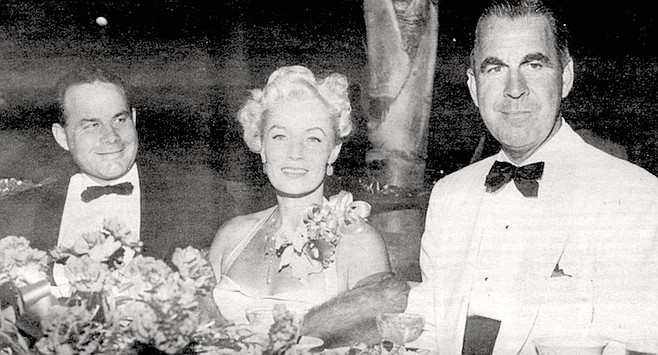
San Diego Mayor John Butler, Mrs. Robert Vogeller, Smith, c. 1953. By the late ̢۪50s I felt I had to get rid of some of the damn things I was running. I think I got a bigger kick out of building and creating things than running them.

Sunday Morning in the Blogosphere

New town-homes in Cavite, Philippines


Trade War Tests Newspapers - Valley News

Drawing support for slain journalists - Poynter

Economic cost of losing newspapers - The Community Word

Our view: Newspapers will not be silenced - Northwest Herald

Protect jobs at newspapers and paper mills - Stop Newsprint Tariffs

Warren Buffett turns over operation of BH Media - Omaha World-Herald

Fate of Detroit's newspaper partnership unclear - Crain's Detroit Business

Trade war threatens already struggling US newspaper industry - Lowell Sun

Two assignments for Capital Gazette journalists: healing and reporting - CNN

Can journalists counteract hatred toward the press? It starts with explaining what we do - Poynter


Facebook piloting subscriptions for private groups

Facebook is piloting subscriptions with a small number of groups.

“We hear from group admins that they’re looking for ways to help them earn money to deepen engagement with their members and continue to support their communities,” Facebook said in its blog post on the pilot.

Read more....

Today in Labor History


Labor History July 1st
The International Ladies’ Garment Workers’ Union Pickets
Steel workers in Cleveland, led by the Poles and Czech wire mill workers, began a violent strike in what was to be an 88-week strike against wage cuts. – 1885
The Amalgamated Association of Iron, Steel and Tin Workers staged what was to become an unsuccessful three-month strike against U.S. Steel Corp. Subsidiaries. – 1901
The International Ladies’ Garment Workers’ Union (ILGWU) organized the “Great Revolt”, a strike involving 50,000 cloakmakers that lasted over 4 months. Following the lead from women, the mostly male cloakmakers won uniform wages, a shorter workweek and paid holidays. As with the result of the strikes in 1909 and 1910, the ILGWU swelled in membership. – 1910
Some 1,100 streetcar workers went on strike in New Orleans, spurring the creation of the po’ boy sandwich by local sandwich shop owners and one-time streetcar men. “Whenever we saw one of the striking men coming,” Bennie Martin later recalled, “one of us would say, ‘Here comes another poor boy.’” Martin and his brother Clovis fed any striker who showed up. – 1929
The Great Railroad strike of 1922, commonly know as the “Big Strike” was a nationwide strike of railroad workers. Launched by seven of the sixteen railroad labor organizations in existence at the time, the strike lasted just over a month before collapsing. At least ten people, most of them strikers or family, were killed in connection with the strike. – 1922
The Hawaiian longshore strike brought together Japanese, Filipino and other ethnic plantation workers into one labor union. – 1937
The United Auto Workers (UAW), under the leadership of Walter Reuther, left the American Federation of Labor (AFL). They left because of conflicts between Reuther and AFL president George Meany. Reuther died in a plane crash in 1970, and the UAW did not rejoin the AFL until 1981. – 1968
The National Association of Post Office & General Service Maintenance Employees, the United Federation of Postal Clerks, the National Federation of Post Office Motor Vehicle Employees and the National Association of Special Delivery Messengers merge to become the American Postal Workers Union. – 1971
The International Jewelry Workers Union merged with Service Employees International Union. – 1980
The Graphic Arts International Union merged with the International Printing & Graphic Communications Union to become the Graphic Communications International Union, now a conference of the Teamsters. – 1983
Copper miners began a  years-long, bitter strike against Phelps-Dodge in Clifton, Arizona. Democratic Governor Bruce Babbitt repeatedly deployed state police and National Guardsmen to assist the company over the course of the strike, which broke the union. – 1983
The Amalgamated Clothing & Textile Workers Union merged with International Ladies’ Garment Workers’ Union to form the Union of Needletrades, Industrial & Textile Employees. – 1995
The International Chemical Workers Union merged with the United Food & Commercial Workers International Union. – 1996
The Newspaper Guild merged with the Communications Workers of America. – 1997
The United American Nurses affiliated with the AFL-CIO. – 2001